

Quick answer: Yes, you technically can use someone else’s E-ZPass, but there’s a catch – and it’s a big one. The vehicle must be officially registered on the account holder’s E-ZPass account, or you’re looking at violations, fees, and a whole lot of headaches.
Let me guess – you’re borrowing your friend’s car for the weekend, or maybe your spouse handed you their E-ZPass tag with a casual “just stick it on your windshield.” Hold up! Before you cruise through that toll plaza thinking you’re all set, there are some serious rules you need to know about.
Trust me, I’ve seen enough horror stories of people getting slapped with violation notices to know this isn’t something you want to wing.
The Real Deal: What E-ZPass Actually Allows
Here’s the thing that trips up most people: E-ZPass agencies do allow transponder sharing between vehicles – but only under specific conditions that most folks completely ignore.
The golden rule? The vehicle using the transponder must be officially listed on the account holder’s E-ZPass account. Not just a mental note, not a verbal agreement – we’re talking about actually logging into the account and adding the vehicle’s license plate, make, model, and year.
Most E-ZPass customer agreements are crystal clear about this: tags can only be used on vehicles specifically registered to the account. Skip this step, and you’re basically gambling with toll violations.
The Three Non-Negotiable Requirements
Before you even think about using someone else’s E-ZPass, these boxes need to be checked:
- Vehicle registration on the account – This isn’t optional, it’s mandatory
- Vehicle class compatibility – A passenger car tag won’t work properly on a commercial truck
- Proper transponder mounting – Slapping it on your dashboard won’t cut it
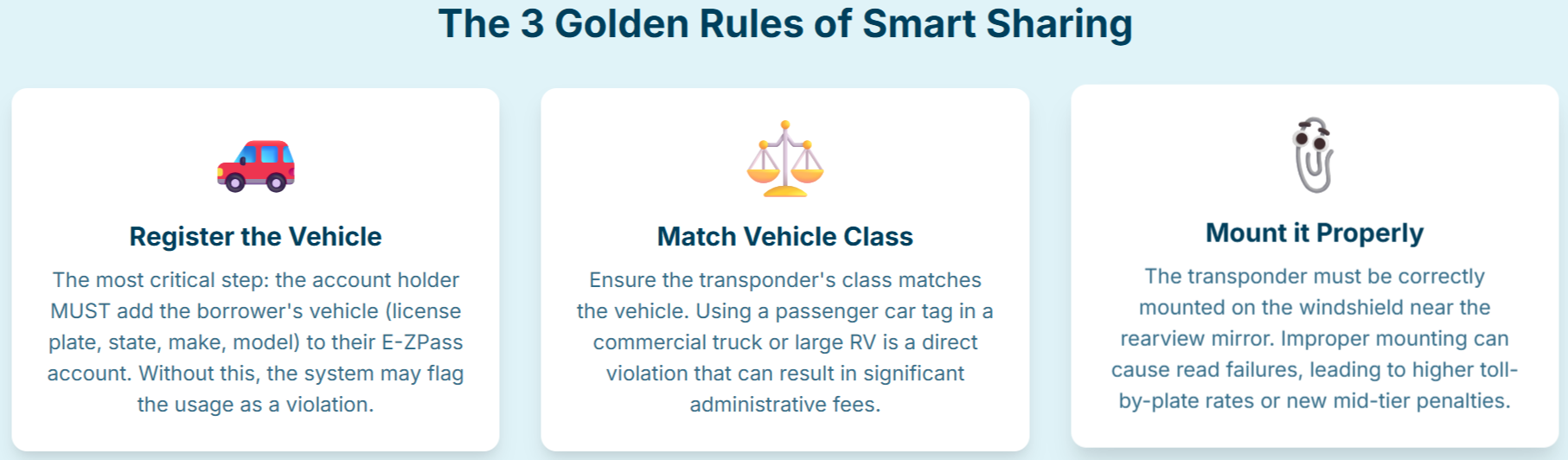
Miss any of these, and you’re setting yourself up for trouble. The automated systems in 2026 are way smarter than they used to be, and they’ll catch these mistakes faster than you can say “violation notice.”
Who’s Really on the Hook? (Spoiler: It’s Not You)
This might surprise you, but here’s the kicker: the account holder remains 100% responsible for everything. Every toll, every fee, every violation – it all comes back to the person whose name is on that E-ZPass account.
Think about it from the toll agency’s perspective. They have zero relationship with you as the borrower. Their contract is exclusively with the account holder, and that’s where the buck stops.
I’ve heard too many stories of friendships getting strained because someone borrowed an E-ZPass “for just one trip” and ended up triggering hundreds of dollars in violation fees. The borrower thought they were helping, the account holder thought it was no big deal – until the bills started rolling in.
What This Means in Practice
The account holder is liable for:
- All tolls incurred, regardless of who was driving
- Administrative fees if something goes wrong
- Violation charges if the system flags the usage
- Maintaining sufficient account balance
- Keeping all vehicle information current and accurate
Yeah, it’s a lot of responsibility. That’s why casual E-ZPass lending is riskier than most people realize.
The 2026 E-ZPass Landscape: New Rules, Higher Stakes
2026 has brought some major changes to the E-ZPass world, and honestly? They’re making the system way less forgiving of casual rule-bending.
Open Road Tolling Is Everywhere Now
Pennsylvania launched Open Road Tolling on the eastern portion of the Turnpike (east of Reading) and the Northeast Extension on January 5, 2025. The statewide rollout is expected in January 2027. This means overhead gantries are reading transponders at highway speeds – no more traditional tollbooths in many areas.
The catch? These systems are incredibly precise about proper transponder mounting and vehicle registration. Get it wrong, and you’ll pay double the E-ZPass rate through their Toll By Plate system.
New York and New Jersey Got Stricter
As of July 6, 2025, the Port Authority implemented ‘Mid-Tier’ toll rates for E-ZPass users (registered with a New York or New Jersey account) whose transponders aren’t properly mounted or can’t be read correctly.
This isn’t just a technical glitch anymore – it’s a deliberate penalty structure. They’re basically saying, “Use our system properly, or pay more.”
Virginia’s Violation Processing Keeps Rolling
Virginia continues its aggressive violation processing, especially for vehicles not properly registered on E-ZPass accounts. One mismatch between your license plate and the account records? Violation notice in the mail.
The Smart Way to Share an E-ZPass (If You Must)
Look, I get it. Sometimes you really do need to share that transponder. Here’s how to do it without creating a financial nightmare:
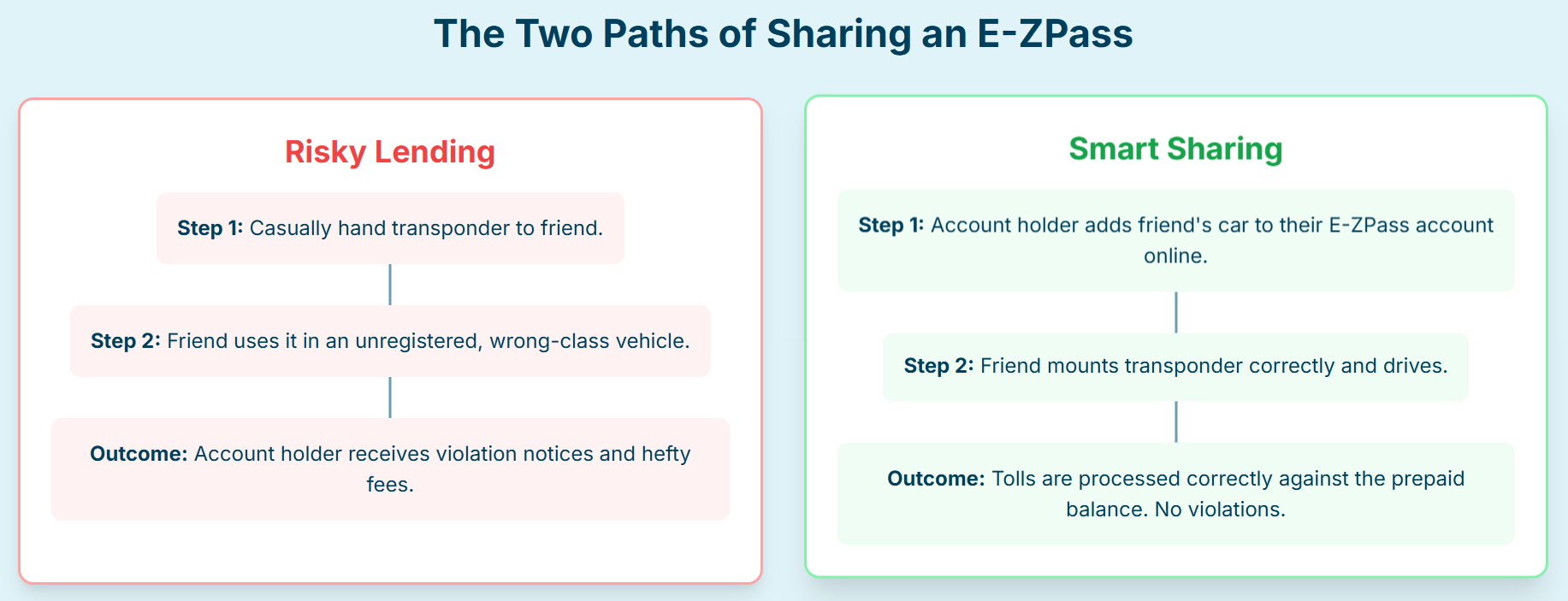
Step 1: Update the Account First
Before anyone drives anywhere, the account holder needs to log into their E-ZPass account and add the borrowing vehicle’s information. This includes:
- License plate number and state
- Vehicle make, model, and year
- Verification that it’s the same vehicle class
This step is absolutely critical. Don’t skip it, don’t procrastinate – do it first.
Step 2: Mount the Transponder Properly
The transponder needs to go on the windshield, near the rearview mirror, exactly like the instructions say. Dashboard mounting or hanging it from the mirror? That’s asking for read failures and higher toll rates.
Pro tip: Most E-ZPass agencies will send you extra mounting strips for free if you ask. Way better than dealing with violations later.
Step 3: Set Clear Expectations
Have an honest conversation about who’s paying for what. The account holder is legally responsible, but you’ll want to work out reimbursement details beforehand. Trust me, this conversation is way easier before the tolls start adding up.
Step 4: Monitor the Account
The account holder should keep an eye on their statements, especially right after the transponder gets borrowed. Catch any issues early, and they’re usually easier to resolve.
Smarter Alternatives to Casual Sharing
Instead of lending your primary transponder, consider these safer, official options to provide electronic tolling access to friends or family, reducing risk and ambiguity.
| Method | Best For | Key Consideration |
|---|---|---|
| Add a Transponder | Family members or regular users of another car. | Most accounts allow up to 4 transponders. Each can be linked to a primary vehicle. |
| Use in a Rental Car | Temporary use while traveling. | Add the rental plate to your account for a specific date range to avoid extra tolls. |
| Toll-By-Plate | Infrequent borrowers where sharing isn’t feasible. | Higher toll rates apply. The vehicle’s registered owner receives the bill and must seek reimbursement. |
| Get Their Own Account | Any individual who will be driving on toll roads regularly. | The most responsible and direct way to manage toll payments and avoid all liability issues. |
The Bottom Line: Is It Worth the Risk?
Here’s my honest take: casual E-ZPass sharing is rarely worth the hassle in 2026’s more automated, less forgiving toll environment.
The systems are smarter, the penalties are higher, and the agencies are way more aggressive about enforcement. What used to be a minor inconvenience can now turn into serious money and administrative headaches.
If you absolutely must share a transponder, do it the right way – with proper vehicle registration and clear agreements about responsibility. But for regular use? Get your own E-ZPass or use one of the alternatives I mentioned.
The peace of mind alone is worth the small extra cost or effort. Plus, you’ll sleep better knowing you’re not accidentally setting up a friend or family member for a surprise bill that could strain your relationship.

Pavithra Vinoth is the founder of nytollsinfo.com, where she simplifies U.S. toll systems through expert insights and custom-built calculators. Her research-driven tools help drivers avoid costly mistakes and make smarter car decisions.