

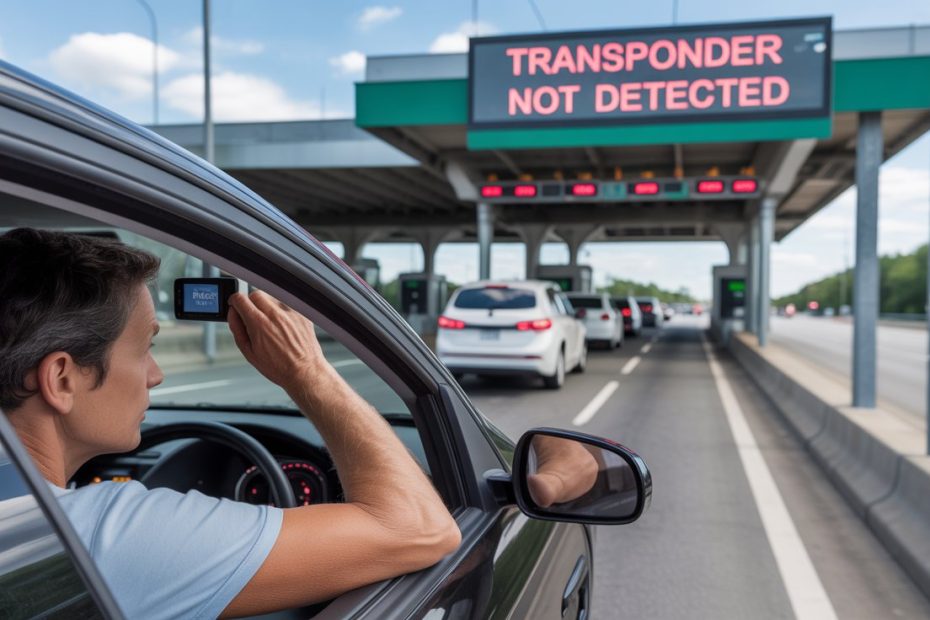
Your E-ZPass just beeped wrong at the toll plaza, and now you’re wondering if a fine is headed your way. Good news: most E-ZPass issues are fixable fast, and you almost certainly won’t get penalized if you act quickly.
- The Short Answer First
- Why Your E-ZPass Might Not Be Working
- What Actually Happens at the Toll Plaza When It Fails
- How to Fix the Problem Before It Costs You
- Can You Dispute an E-ZPass Violation?
- How to Prevent This From Happening Again
- What If You Use E-ZPass in Multiple States?
- Real Talk: Is E-ZPass Worth It?
- Your E-ZPass Toolkit: Quick Reference
- Keep Rolling and Stay Ahead of It
The Short Answer First
If your E-ZPass does not read at a toll booth, one of three things happens:
- The toll agency photographs your license plate and bills you by mail
- You get charged a pay-by-plate rate, which is often slightly higher than the E-ZPass rate
- In rare cases, you may receive a violation notice if the plate photo is unclear
The key takeaway here is simple. Act fast, contact your E-ZPass agency, and document everything. Most agencies will waive fees if you report the problem proactively.
Why Your E-ZPass Might Not Be Working
So what actually causes these frustrating beep-and-miss moments? There are more reasons than you might expect.
Dead or Low Battery
E-ZPass transponders run on internal batteries. Over time, those batteries lose their charge and the transponder simply stops communicating with the toll reader.
Most transponders last 5 to 10 years, so if yours is getting old, a dead battery is the most likely culprit. Contact your issuing agency for a free replacement.
Improper Mounting
This one trips up a lot of people. Mounting your transponder on a metallic window tint, behind a rearview mirror bracket, or at the wrong angle can block the signal entirely.
The E-ZPass Group recommends placing your transponder on the interior of the windshield, centered and near the top, away from any metal or tinted film.
Account Issues
Sometimes the problem has nothing to do with the hardware at all. A low account balance, an expired credit card on file, or a suspended account will cause your transponder to fail at the toll.
Your tag technically works, but your account does not. Check your balance regularly at your state’s E-ZPass portal.
Toll Reader Malfunction
Yep, the equipment on their end can fail too. Toll readers occasionally glitch, especially in bad weather.
If your transponder consistently works everywhere else but fails at one specific plaza, the reader is probably the issue. In that case, report it to the toll agency and you should be cleared without penalty.
Damaged Transponder
Physical damage from drops, extreme heat inside a parked car, or even liquid exposure can kill a transponder. If yours looks warped, cracked, or discolored, it is time to request a replacement.
What Actually Happens at the Toll Plaza When It Fails
Here is the part most people worry about. When your E-ZPass does not read successfully, you do not just drive through for free. The system is watching.
Plate Photography
Virtually every modern toll lane has overhead cameras. The moment your transponder fails to register, those cameras snap your license plate. This happens automatically, with no human involvement at all.
Pay-By-Plate Billing
Your plate image gets matched to your vehicle registration, and a bill goes to your mailing address. The rate is usually slightly higher than your E-ZPass rate. This is not a fine. It is simply an alternative payment method.
Violation Notices
If the system cannot read your plate clearly, or if you do not respond to the mailed bill, then things can escalate to a violation notice.
That usually carries an administrative fee on top of the original toll amount. Ignoring those is where people get into real trouble.
How to Fix the Problem Before It Costs You
The moment you suspect your transponder failed at a toll, take these steps.
Step 1: Check Your Account Online
Log into your state’s E-ZPass portal immediately. Look for:
- Recent toll transactions (did the charge post?)
- Account balance (is it too low?)
- Any alerts or account flags
Most states have portals that update within a few hours of a toll event. If the charge posted correctly, you are fine.
Step 2: Call Your E-ZPass Agency
If you did not see a successful transaction, call your issuing agency directly. Here are some key contacts:
| Agency | Phone Number |
|---|---|
| E-ZPass NY | 1-800-333-8655 |
| E-ZPass NJ | 1-888-288-6865 |
| E-ZPass PA | 1-877-736-6727 |
| E-ZPass MA (RMV) | 1-877-627-7745 |
| E-ZPass VA | 1-877-762-7824 |
Tell them where and when the incident occurred. Most agencies will flag your account and waive any fees while they investigate.
Step 3: Request a Transponder Replacement
If your transponder is old or damaged, ask for a replacement during the same call. Many agencies offer free replacements under warranty. You can also visit a local E-ZPass customer service center to swap it in person.
Step 4: Respond to Any Mail Immediately
If a pay-by-plate bill or violation notice arrives, do not set it aside. Respond within the timeframe listed on the notice.
If you have already contacted your agency and have a reference number, include that in your response. Agencies are generally reasonable when you show you tried to resolve it early.
Can You Dispute an E-ZPass Violation?
Yes, absolutely. And you should if you believe the charge was in error.
How to File a Dispute
Most agencies allow you to dispute online, by mail, or by phone. You will need:
- The violation or notice number
- The date, time, and location of the toll
- Proof of a valid E-ZPass account (a screenshot or account statement works)
- Documentation of any transponder issues you reported
The E-ZPass Interagency Group provides general guidance, but you will need to file your dispute with the specific state agency that issued the notice.
Success Rates for Disputes
Honestly, your chances are pretty good if you have a solid paper trail. Agencies see transponder malfunctions all the time. First-time issues with a valid account and a proactive report are usually resolved in your favor.
How to Prevent This From Happening Again
Prevention is always smarter than damage control. A few simple habits will keep your E-ZPass working reliably.
Mount It Correctly
Follow the mounting instructions that came with your transponder. Keep it away from:
- Metallic window tints
- Rain sensor strips on the windshield
- Heating elements embedded in the glass
- Adhesive residue from old mounts
Keep Your Account Funded
Set up automatic replenishment so your balance never drops too low. Most agencies let you set a minimum threshold, after which your linked card auto-refills the account.
Check for Transponder Age
Most E-ZPass transponders are officially rated for an 8-year lifespan, though many last longer. If yours is approaching that age, request a proactive replacement. It is free in most states and takes five minutes.
Test It Periodically
Some E-ZPass agencies offer a way to test your transponder at a service center or through a self-test feature on their website.
Take advantage of this, especially before a long road trip. Because discovering your pass is dead somewhere on the New Jersey Turnpike is not exactly the highlight of anyone’s day.
What If You Use E-ZPass in Multiple States?
E-ZPass works across 19 states on the East Coast and Midwest. Your single transponder handles tolls in all of them through the E-ZPass Interoperability Agreement. However, there are a few things to keep in mind.
- Rates vary by state, even with the same transponder
- Some HOV or express lanes have special requirements
- Violations issued in another state still come back to your home account
If you travel across state lines frequently, double-check that your account is set up correctly for interoperability. Your home agency’s website will have the details.
Real Talk: Is E-ZPass Worth It?
You might be wondering whether all this hassle is even worth it compared to just paying cash. Short answer? Yes, by a wide margin.
E-ZPass users typically save 10 to 30 percent on tolls compared to cash rates, depending on the state. The time savings alone are significant, especially on heavily tolled routes like I-95 or the Garden State Parkway.
The occasional malfunction is annoying, but it is also the exception rather than the rule. According to the Federal Highway Administration, electronic toll collection now handles the majority of toll transactions across the country because it genuinely works well the vast majority of the time.
Your E-ZPass Toolkit: Quick Reference
Keep this list handy for when things go sideways.
If your transponder fails at a toll:
- Check your account online within 24 hours
- Call your issuing agency and report the incident
- Note the reference number from your call
- Watch for mail and respond promptly if anything arrives
If you receive a violation notice:
- Do not ignore it
- Gather your account documentation
- File a dispute online or by phone
- Reference your earlier report if you made one
Keep Rolling and Stay Ahead of It
A malfunctioning E-ZPass is annoying, but it is far from a disaster. The system has built-in safeguards, agencies are generally understanding, and most issues resolve cleanly when you act quickly. The real mistake is doing nothing and hoping it goes away. It will not.
Check your transponder, keep your account funded, mount it correctly, and know who to call when something goes wrong. That is really all there is to it. Now go enjoy the fast lane.

Pavithra Vinoth is the founder of nytollsinfo.com, where she simplifies U.S. toll systems through expert insights and custom-built calculators. Her research-driven tools help drivers avoid costly mistakes and make smarter car decisions.