

Ever stared at that little white box, then at your windshield, and felt a wave of confusion? You’re not alone. The great E-ZPass placement debate is real, especially with those mysterious black dots.
So, can you stick your transponder on them? Let’s get right to it.
- What Are Those Black Dots Anyway? The Great Windshield Mystery
- Busting E-ZPass Myths
- The Real Culprit: Your Fancy High-Tech Windshield
- The Plot Twist: The Black Dots Are Your Savior
- A Simple Guide to Not Messing This Up
- Okay, I Know My Windshield Type. Now What?
- Frequently Asked Questions (FAQ)
- What If It Still Doesn't Work?
- So, What's the Real Tea?
The Quick Answer
Yes, you absolutely can, and for many new cars, you should put your E-ZPass on the black dots. For a growing number of modern vehicles (especially EVs and luxury cars with heat-reflective glass), the dotted “frit” area is the only spot where a transponder will work reliably.
Golden Rule: Always check your car’s owner’s manual first! The manufacturer’s instructions for your specific model trump any generic advice.
What Are Those Black Dots Anyway? The Great Windshield Mystery
Let’s clear this up once and for all. Those black dots and the solid band around your windshield aren’t just for decoration. This feature has a name, it’s called a “frit,” and it’s basically a super-durable ceramic paint that’s baked onto the glass during manufacturing.
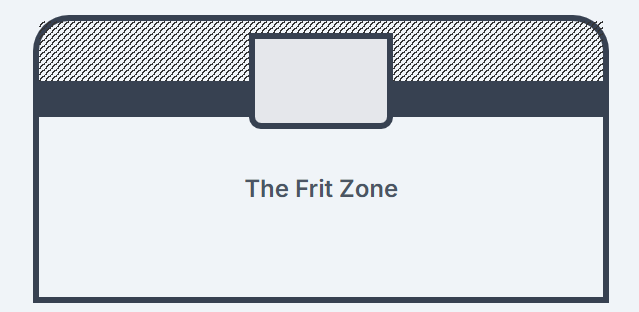
It serves a few critical purposes. First, it blocks UV rays from degrading the urethane adhesive that holds your windshield in place (which is, you know, important). Secondly, it provides a rougher surface for that adhesive to create a super-strong bond. Think of it as the unsung hero keeping your windshield from flying off at 70 mph.
So, the Frit Itself Doesn’t Block the Signal?
Nope, not at all. This is the biggest misconception out there. The frit is a ceramic material, which is a dielectric (an electrical insulator). Your E-ZPass transponder uses RFID (Radio Frequency Identification), and its 915 MHz signal passes through ceramic like it’s not even there.
It’s not some signal-blocking forcefield. The real villain in this story is something far more high-tech and, honestly, a bit of a diva.
Busting E-ZPass Myths
Let’s tackle the biggest points of confusion head-on.
| Myth | Fact |
|---|---|
| The black dots block the RFID signal. | False! The ceramic dots are signal-friendly. The real problem is an invisible metallic coating on the rest of the windshield in many new cars. |
| This is a leading cause of read errors and is unsafe. A secure mount, as recommended by all official E-ZPass agencies, is essential for consistent performance. | This is outdated, one-size-fits-all advice. For cars with modern heat-reflective windshields, the dotted area is often specifically designed as an “RF window” to let signals pass through. |
| Holding the pass up to the windshield works just as well. | This is a leading cause of read-errors and is unsafe. A secure mount, as recommended by all official E-ZPass agencies, is essential for consistent performance. |
The Real Culprit: Your Fancy High-Tech Windshield
Remember when you ticked the box for that awesome tech package? Well, you might have inadvertently signed up for a signal-blocking windshield. Many modern vehicles, especially EVs and luxury cars, come with something called an “athermic” or “infrared-reflective” windshield.
These windshields are designed to keep your car cooler in the summer by reflecting heat. They do this with a nearly invisible, ultra-thin layer of metal (such as silver or zinc) embedded in the glass. The catch? This metal layer is excellent at blocking radio signals, including GPS, radar detectors, and yes, your E-ZPass transponder.
Essentially, this technology turns your entire windshield into a giant, mostly transparent Faraday cage. It’s great for thermal efficiency but a total nightmare for toll transponders. So, if your pass isn’t working, don’t blame the dots; give your fancy, heat-reflecting glass the side-eye.
The Plot Twist: The Black Dots Are Your Savior
Now for the twist you didn’t see coming. Car manufacturers aren’t clueless; they know their metallic windshields create a signal dead zone. So, what did they do? They engineered a solution.
They intentionally leave a small, uncoated section in that metallic layer so that signals can pass through freely. This designated spot is called an “RF window.” And where do they almost always place this magical window? You guessed it: right in the middle of the black dot frit band, usually on either side of the rearview mirror mount.
Wait, So I Have to Put It on the Dots?
For an increasing number of cars, the answer is a resounding YES. If you own a vehicle with a known RF-blocking windshield, the frit area isn’t just an option; it’s mandatory. This directly contradicts the generic instructions from E-ZPass, but it’s the only way.
Vehicles known for this feature include:
- Ford Mach-E & F-150 Lightning: Owners almost universally report that the only working spot is within the dot matrix.
- BMW (with “Climate Comfort” glass): The owner’s manual explicitly tells you to use the dotted area.
- Volkswagen ID.4 (AWD models): The heated windshield requires placement in the frit band’s RF window.
- Many Tesla Models: Teslas often have metallized glass, making the area near the rearview mirror the prime real estate for transponders.
A Simple Guide to Not Messing This Up
Feeling a little more confident? Good. Before you go sticking that transponder on with reckless abandon, let’s figure out what kind of windshield you’re dealing with.
Step 1: RTFM (Read The Friendly Manual)
I know, I know, who reads the manual? But in this case, it’s your bible. This is the single most authoritative source of information for your specific vehicle. Look in the index for “toll pass,” “transponder,” or “windshield.” The manufacturer’s advice always trumps the generic advice from the tolling agency.
Step 2: The Polarized Sunglasses Test
Time to play detective. Go outside on a sunny day and look at your windshield from different angles while wearing a pair of polarized sunglasses. Athermic windshields often have a tell-tale purplish or mirrored tint.
Step 3: When in Doubt, Ask an Expert (or a Forum)
If the manual is vague, call your car’s dealership service department or find an owner’s forum for your car model online. A quick search for “E-ZPass placement” will yield a ton of firsthand experiences.
Okay, I Know My Windshield Type. Now What?
You’ve done your homework and diagnosed your glass. Here’s your game plan.
For Standard, Old-School Windshields
If you have regular, non-metallized glass, congratulations! You can follow the official E-ZPass instructions and place it on the clear glass. Or, you can stick it right on the dots. IMO, this looks much cleaner.
For Fancy, Signal-Blocking Windshields
Listen closely: if you have a confirmed athermic or heated windshield, you must ignore the standard E-ZPass instructions. Your only mission is to place that transponder squarely within the manufacturer’s designated RF window in the dot matrix area.
No matter where you place it, follow these installation best practices:
- Clean the Area: Use an alcohol wipe to clean the glass. Make sure it’s completely dry.
- Press Firmly: Peel the backing and press the transponder firmly against the glass for at least 30 seconds.
- Orient it Correctly: Make sure the transponder is installed right-side up, with the label facing you.
Frequently Asked Questions (FAQ)
What about the new sticker-style transponders? Do the same rules apply?
Yes, absolutely. Sticker transponders are even more sensitive to placement because they are “passive” and don’t have a battery. For them, being in the correct RF window on a metallized windshield is critical.
Can I paint my E-ZPass transponder black to hide it?
Many people do this with spray paint for plastics (like Krylon Fusion) and report no issues. However, do this at your own risk, as it could technically void the agreement with your E-ZPass provider. Never paint over the label or serial number.
Will a regular tinted strip block the signal?
A standard, non-metallic tint strip at the top of your windshield generally won’t block the signal. However, some high-end ceramic or metallic tints can be, which is why E-ZPass advises mounting below them.
What If It Still Doesn’t Work?
So you followed the instructions, but your pass still isn’t getting read. Don’t panic! First, double-check that your license plate is correctly listed on your E-ZPass account. This is your backup.
Second, consider the age of your transponder. The internal batteries in the older, box-style units don’t last forever. Contact your E-ZPass agency for a free replacement.
Finally, if all else fails, there’s a foolproof solution: an external transponder. These weatherproof units mount to your front license plate, bypassing the windshield entirely.
So, What’s the Real Tea?
At the end of the day, the black dots have been wrongly accused. The real story is the silent battle between tolling technology and modern automotive glass.
The golden rule for 2026 and beyond is simple: trust your car’s manufacturer over the generic advice from the tolling agency. Your owner’s manual is your ultimate guide. For a growing number of us, that means the black dots aren’t just an acceptable place for your E-ZPass, they’re the only place.

Pavithra Vinoth is the founder of nytollsinfo.com, where she simplifies U.S. toll systems through expert insights and custom-built calculators. Her research-driven tools help drivers avoid costly mistakes and make smarter car decisions.