

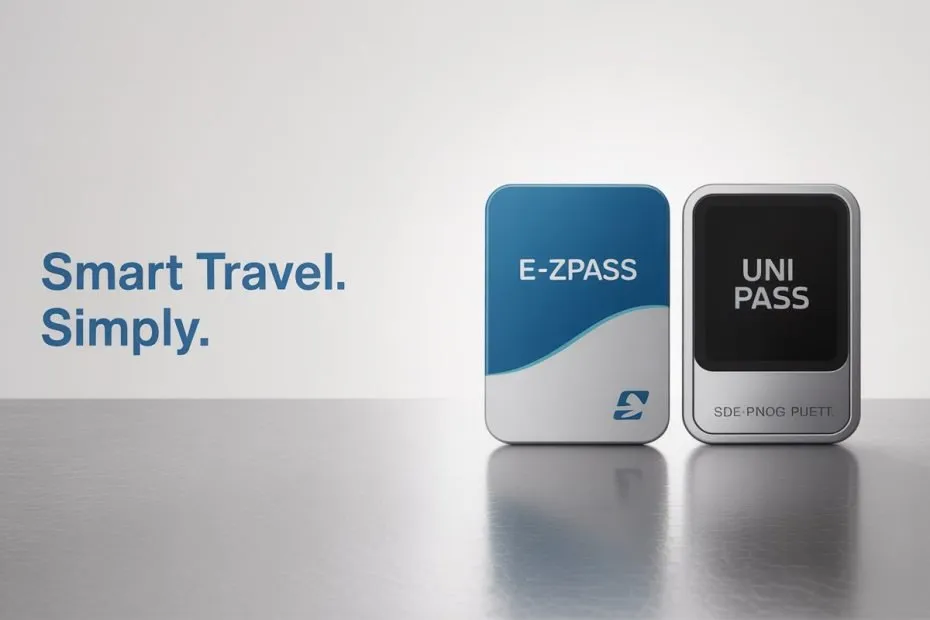
Stuck at a toll plaza? Fumbling for change? Welcome to, well, about ten years ago. Today, it’s all about the transponder life. But if you’ve started planning a road trip, you’ve probably hit the same wall I did: the dizzying world of electronic toll passes. You’ve got the old guard, E-ZPass, and this newer, slick-looking challenger, Uni Pass. So, what’s the deal?
Let me cut to the chase. If your driving world revolves around your home state and you can snag some juicy local commuter discounts, E-ZPass is likely your champion. But if you’re a road warrior, crossing state lines like they’re going out of style and crave simplicity, Uni Pass is probably the answer you’ve been looking for.
Now, why is that? It all boils down to how these systems are built and who they’re built for. Let’s break it down, driver to driver.
E-ZPass vs. Uni Pass: What’s the Real Difference?
On the surface, they both seem to do the same thing: get you through tolls without stopping. But peel back one layer, and you’ll see they have totally different philosophies.
E-ZPass: The OG Network
E-ZPass has been around forever, since 1987, to be exact. It’s not one single company but a big club called the E-ZPass Interagency Group (IAG). Think of it like a consortium of different state agencies that all agree to read each other’s transponders. It’s a massive network, and that’s its biggest strength.
But here’s the catch, and it’s a big one. Because it’s a bunch of independent agencies, each state’s E-ZPass has its own rules, fees, and discount programs. The E-ZPass you get from New Jersey isn’t the same as the one from Pennsylvania or New York, even though they all work in the same places. This is where the headaches usually start.
Uni Pass: The New Kid on the Block
Uni Pass, often just called Uni, is the challenger, and it was built specifically to solve that headache. It’s a product from E-PASS, the tolling system from the Central Florida Expressway Authority (CFX). Their goal was simple: create one pass, with one account and one bill, that works across a ton of states.
Instead of a messy network of agencies, Uni is a single product that promises a unified experience across 20 states. It was literally designed to fix the complexity of needing multiple transponders or dealing with different rules for interstate travel. That’s a pretty bold mission, IMO.
Coverage: Where Can These Passes Take You?
This is where things get interesting. E-ZPass now boasts coverage in 20 states, while Uni Pass covers 19, and for the most part, their maps are nearly identical. You’ve got all the big ones covered: Florida, New York, New Jersey, Pennsylvania, Ohio, and more.
- E-ZPass is accepted in 20 states, including Georgia (which joined while keeping its Peach Pass branding) and Florida.
- Uni Pass also works in 19 states and, crucially, works everywhere E-ZPass is accepted. It’s also compatible with other big names like SunPass, PeachPass, and I-PASS.
So, if they cover the same states, what’s the problem? The difference isn’t where they work, but how they work. With an E-ZPass, your account is tied to the state that issued it. If you have a question about a toll in Maine but your pass is from Virginia, you’re dealing with Virginia’s customer service.
With Uni, it’s all managed through one E-PASS account. One point of contact, one bill, no matter which of the 19 states you’re in. For someone who drives through multiple states, that simplicity is a massive quality-of-life improvement.
The Cost Breakdown: Let’s Talk Money
Alright, let’s get down to brass tacks. What’s this going to cost you? This is where the two systems diverge, and where E-ZPass can get… complicated.
Transponder Purchase Cost
E-ZPass: The cost is all over the map, depending on the state.
- In Massachusetts, the transponder is free, but you have to prepay at least $20 into your account.
- In New York, there’s no deposit, but you have to start with a minimum prepaid balance of $25.
- New Jersey might require a $10 refundable deposit per transponder for some account types.
- In Ohio, you’ll pay a $3.00 one-time fee when you activate the transponder.
Uni Pass: This is much simpler. It costs $14.95 plus tax to buy the transponder. That’s it. It’s a one-time purchase.
Monthly Fees & Other Hidden Costs
This is where you really need to pay attention. Some E-ZPass agencies love to sneak in little fees that can add up.
E-ZPass:
New Jersey charges a $1.00 monthly service fee plus another $1.00 for bi-monthly paper statements. Ouch.
Some states, like New York and Pennsylvania, don’t appear to have monthly fees, which is great.
Be careful about inactivity! Some states might charge you a fee or close your account if you don’t use it for a year or two.
Uni Pass:
This is Uni’s mic-drop moment. It’s marketed with “no account fees”.
Plus, any money you prepay into your account never expires. So if you only take a toll road once a year, your money will be sitting there waiting for you.
For my money, the predictable, fee-free structure of Uni is a huge win. I’d rather pay a bit more upfront for the transponder than get nickel-and-dimed with monthly fees forever.
The Discount Dilemma: Who Saves You More?
So, why would anyone put up with the E-ZPass complexity? One word: discounts.
E-ZPass: The Local Hero
This is where E-ZPass can really shine, but only if you play your cards right. The discounts are often amazing, but they are almost always hyper-local.
- A discount plan you have in one state generally does not apply to tolls you rack up in another E-ZPass state.
- In New York, drivers with NY E-ZPass get a 75% discount on some Thruway tolls and can sign up for specific commuter plans for certain bridges.
- In Pennsylvania, E-ZPass users can pay up to 50% less than the Toll By Plate rates.
- Delaware offers a frequent user plan that gives a 50% discount if you make 30+ trips on specific routes in a month.
If you live in one of these areas and use the same toll roads every single day for your commute, these specialized plans can save you a ton of money.
Uni Pass: The Consistent Saver
Uni Pass doesn’t do the whole local commuter plan thing. Its savings are more universal. You’ll generally save over the higher cash or Pay-By-Plate toll rates across its entire 19-state network.
Its biggest perk is for Florida drivers. As an E-PASS product, Uni users get access to the E-PASS Volume Toll Savings program on Central Florida Expressway (CFX) roads, which can offer up to 25% in savings based on how much you use it per month.
So, what’s the verdict? It creates a “discount dilemma”. Do you want potentially massive savings on a few specific roads (E-ZPass), or a simpler system with more general savings everywhere you go (Uni)? Your daily driving habits will give you the answer.
Tech and Usability: Is Your Pass Future-Proof?
The little plastic box on your windshield matters. How it’s designed can affect your daily use and how long it’ll be useful.
Portability: Can I Move It?
Ever gotten a rental car and wondered if you can use your pass?
- E-ZPass: Usually, yes. Standard hard-case transponders can be moved between vehicles of the same class, as long as you update the license plate on your account. However, some states, like Illinois, now issue sticker tags that are not transferable. Once you stick it on, it’s there for good.
- Uni Pass: Portability is a core feature. The transponder attaches with suction cups, making it incredibly easy to move from your car to your motorcycle to a rental and back again. You just have to remember to update the vehicle info in the app each time.
Future-Proofing: The “Tri-Protocol” Advantage
This might sound a bit nerdy, but it’s important. Uni is built with something called “tri-protocol technology”. What on earth does that mean? It means it’s designed to evolve as the national tolling network grows. As more states join the party, Uni should be ready to work with them without you needing a new device.
This is a direct lesson learned from older technology. Uni’s predecessor, the E-PASS Xtra, had “limited dual-protocol technology” that might not work with all future states that join the interoperability network.
This suggests that some older E-ZPass transponders from various states could face the same issue down the road. For me, buying a pass with future-proof tech is a big deal; I really don’t want to go through this whole process again in a few years.
So, Who Wins in 2025? My Verdict
There’s no single “best” pass for everyone. The right choice is all about you. Here’s how I see it for different types of drivers:
The Local Commuter:
If you live and work in one state and can take advantage of deep commuter discounts (like those in New York ), you should probably get that state’s E-ZPass. Just check if your state charges monthly fees (looking at you, New Jersey) and weigh the costs.
The Multi-State Road Tripper:
For you, Uni Pass is almost a no-brainer. The simplicity of one account, no monthly fees, and its future-ready tech is exactly what you need for hassle-free travel across its 19-state network.
The Budget-Conscious Driver:
This is a toss-up. Uni’s $14.95 transponder cost with no monthly fees is incredibly straightforward and appealing. However, if you live in a state like Massachusetts that gives you a free E-ZPass transponder with no monthly fee, that’s tough to beat.
The Multi-Car Household / Renter / Motorcyclist:
Get the Uni Pass. End of story. Its suction-cup design makes it ridiculously easy to move between vehicles, which is its standout feature. It’s built for this exact kind of use.
The Final Word
Ultimately, choosing between E-ZPass and Uni Pass in 2025 comes down to a simple trade-off: localized perks vs. universal simplicity. E-ZPass is the established giant with powerful, state-specific discounts, while Uni is the modern challenger built for easy, fee-free, multi-state travel.
Whichever pass you choose, remember that neither is a “set it and forget it” solution. You still have to manage your account! Always keep your vehicle information and payment method up to date to avoid surprise bills or violations.
Now you have the intel. Assess your own driving habits, pick your pass, and get back on the road. Happy (and cheaper) travels!

Pavithra Vinoth is the founder of nytollsinfo.com, where she simplifies U.S. toll systems through expert insights and custom-built calculators. Her research-driven tools help drivers avoid costly mistakes and make smarter car decisions.