

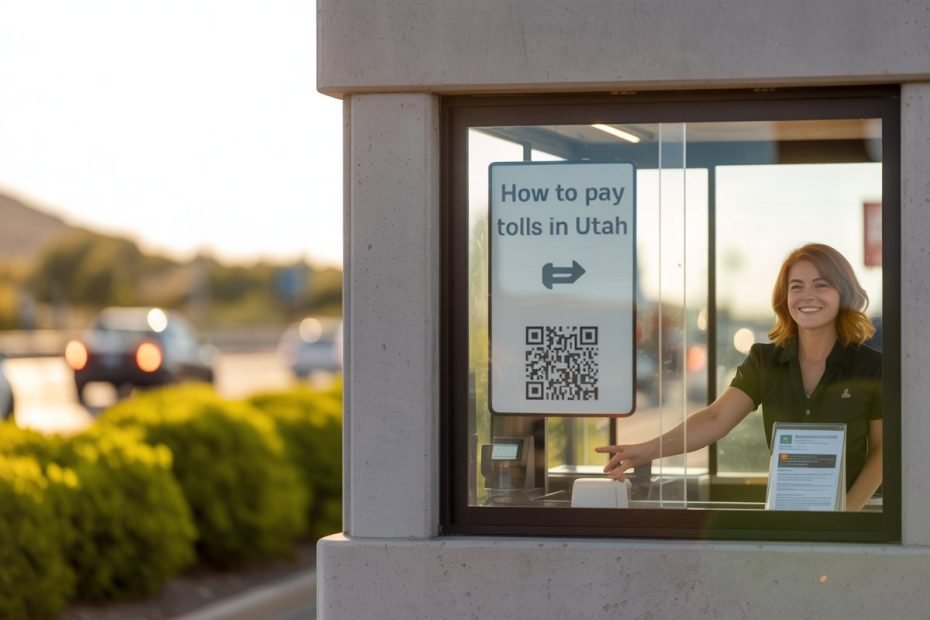
Utah’s toll system runs on one main tool: the Express Pass transponder. Get one, load it with funds, and you’re set for every Express Lane on the I-15 corridor. Skip it, and you’re either looking at a traffic violation or a hefty rental car fee. Either way, knowing the rules upfront saves you money and headaches.
I’ve spent enough time on the Wasatch Front to say this confidently: Utah’s system is actually one of the cleaner toll setups in the country once you understand it. Let me walk you through everything you need to know for 2026.
- What Toll Roads Exist in Utah Right Now?
- The Only Way to Pay Utah Tolls: The Express Pass
- How the Express Pass Transponder Works
- Who Pays and Who Rides Free
- Express Pass Costs and Account Setup
- How Toll Pricing Works on the I-15 Express Lanes
- Paying Tolls in a Rental Car
- The Adams Avenue Parkway: Utah's Private Toll Road
- Does Utah Accept E-ZPass or Out-of-State Transponders?
- Watch Out for Toll Scam Texts
- What Happens If You Get a Violation Notice
- Quick Reference: Utah Toll Facts for 2026
- Ready to Hit the Road Without the Stress?
What Toll Roads Exist in Utah Right Now?
Before you worry about payment methods, it helps to know exactly where tolls apply. Utah isn’t plastered with toll booths like some East Coast states, but the roads that do charge add up fast if you commute daily.
Utah’s tolling centers around the I-15 Express Lanes, a 72-mile High Occupancy Toll (HOT) corridor stretching from Spanish Fork in Utah County all the way to Layton in Davis County. This system is managed entirely by the Utah Department of Transportation (UDOT).
Here’s a quick overview of what’s currently tolled or managed:
| Road | Type | Status |
|---|---|---|
| I-15 Express Lanes | HOT Lanes (72 miles) | Active and tolled |
| SR-201 Express Lanes | Managed lanes | Active |
| West Davis Highway (SR-177) | Freeway corridor | Not yet tolled |
| Adams Avenue Parkway (Ogden) | Private toll road | Cash or proprietary card only |
The I-15 Express Lanes are divided into 16 payment zones (8 in each direction). You pay per zone based on the price displayed when you enter, and that price locks in for your current zone even if traffic gets worse while you’re driving. Pretty fair, actually.
The Only Way to Pay Utah Tolls: The Express Pass
Here’s the thing most people miss: Utah does not have a pay-by-mail or bill-by-plate system for its I-15 Express Lanes. If you drive through without an Express Pass, it’s classified as a traffic violation, not a missed payment. The fine starts at $337 in 2026. So this isn’t a “pay later” situation. It’s a “have your transponder or stay in the regular lanes” situation.
The Express Pass is a windshield-mounted RFID transponder that communicates with overhead gantry readers at highway speeds up to 75 mph. It runs on a prepaid debit model, meaning you load funds in advance and the system deducts tolls automatically as you pass through each zone.
You manage everything through the official Express Pass portal at expresspass.utah.gov.
How the Express Pass Transponder Works
The transponder itself is simple to use, but there’s one feature that catches people off guard: the manual toggle switch. This switch lets you tell the system whether you’re a solo driver paying a toll or a carpool using the lane for free.
Here’s how the two modes work:
TOLL Mode
- Slide the tab to the left until it clicks
- The word “TOLL” appears on the device
- The RFID signal activates and your account gets charged
- Required for all solo drivers
HOV Mode
- Slide the tab to the right
- “HOV” appears on a red background
- The signal deactivates so no charge applies
- Used when you have 2 or more passengers
Getting this wrong is a real problem. If you’re driving solo with the transponder set to HOV, that’s a violation. Double-check your setting before merging into the Express Lane every single time.
Installation: Where to Mount It
Placement matters more than most people realize. Incorrect mounting can cause read errors, which may result in a violation notice even if your account has plenty of funds.
Follow these guidelines exactly:
- Mount on the interior of the front windshield
- Position it at least 2 inches below the rearview mirror
- Keep it within 6 inches from the top of the windshield
Own an EV or plug-in hybrid? Many newer electric vehicles have electromagnetic shielding built into the windshield glass. This shielding can block the transponder’s 915 MHz signal. Check your owner’s manual for a designated “transponder window,” which is an unshielded area of the glass where the device will actually read correctly.
Who Pays and Who Rides Free
Not everyone using the Express Lanes owes a toll. Utah has a clear occupancy-based system, and understanding it helps you use the lanes correctly.
| Vehicle Type | Requirement | Cost |
|---|---|---|
| Solo passenger car | Transponder mandatory | Toll applies |
| Carpool (2+ occupants) | Transponder optional | Free |
| Motorcycle | Nothing required | Free |
| Bus | Nothing required | Free |
| Solo EV driver | Transponder mandatory | Toll applies |
| Heavy vehicle (over 18,000 lbs) | Prohibited | N/A |
| Vehicle towing a trailer | Prohibited | N/A |
Important Change for EV Drivers in 2026
This one stings a bit if you bought an EV expecting toll-free perks. The federal Clean Vehicle Pass program, which previously allowed solo EV and alternative fuel vehicle drivers to use HOV lanes for free, expired on September 30, 2025.
Starting in 2026:
- Solo EV drivers must use an Express Pass in TOLL mode
- All former “C” decals and Clean Vehicle stickers are no longer valid
- UDOT has already cleared the Clean Vehicle application database
EV drivers now pay the exact same rates as everyone else driving solo. The good news is the rates are still reasonable if you use the lanes smartly.
Express Pass Costs and Account Setup
Setting up an account takes about 10 minutes. Before you start, here’s what the costs look like so there are no surprises:
| Item | Cost |
|---|---|
| Transponder unit | $6.99 to $9.65 |
| Initial prepaid balance required | $25.00 |
| Low balance threshold | $10.00 |
| Auto-replenishment amount | $25.00 |
| Monthly maintenance fee | $2.50 (waived if you spend $2.50+ on tolls) |
| Shipping | Approximately $6.00 |
That monthly maintenance fee is worth understanding. If you drive the Express Lanes regularly, you’ll never pay it because the fee waives automatically once your monthly tolls hit $2.50. If you use the lanes less than once a month, the $2.50 fee applies. Think of it as a light inactivity charge.
How to Open an Express Pass Account
Here’s the step-by-step process:
- Go to expresspass.utah.gov and select “Open an Account”
- Enter your full name, physical street address, and contact numbers
- Create a password (must include uppercase letters, lowercase letters, and numbers)
- Set a 4-digit PIN for account security
- Choose and answer a security question from the available options
- Enter your vehicle information and license plate
- Select your transponder type (sticker mount or switchable)
- Add a credit or debit card for automatic replenishment (PIN-only cards are not accepted)
- Submit your order
Your transponder typically arrives with your initial $25 prepaid balance ready to use. Once it arrives, mount it correctly and you’re good to go.
How Toll Pricing Works on the I-15 Express Lanes
Utah uses dynamic pricing, which means toll rates change in real time based on traffic volume. The goal is to keep Express Lane speeds above 55 mph even when regular lanes are gridlocked. When more solo drivers want in, the price rises to manage demand.
The current pricing range for 2026 sits between $0.25 and $2.00 per zone. Here’s what that looks like in practice:
| Time of Day | Direction | Typical Price Range |
|---|---|---|
| Morning rush (7AM to 9AM) | Southbound toward SLC | Higher rates |
| Evening rush (4PM to 7PM) | Northbound toward Davis/Weber | Higher rates |
| Midday and weekends | Both directions | Lower rates |
The price you see on the overhead sign when you enter a zone is the price you pay for that zone, full stop. If congestion spikes after you merge, your rate doesn’t change. That locked-in pricing is genuinely one of the better design choices in this system.
A Simple Way to Save Money
Check the price sign before the entry point. If it reads more than you’re comfortable paying, stay in the general lanes. The decision point comes before the solid double-white lines, and once you’re across them, you’re committed. Entry and exit are only legal at the dashed line sections, so plan your moves in advance.
Paying Tolls in a Rental Car
Renting a car in Utah? This is where things get a little annoying. Most major rental companies run their own toll programs using your license plate or a built-in transponder, and they charge administrative fees on top of the actual toll cost.
| Rental Company | Program | Daily Admin Fee |
|---|---|---|
| Avis | e-Toll Standard | $6.95 per day used |
| Avis | e-Toll Unlimited | $10.99 to $25.99 per day |
| Hertz | PlatePass | $9.99 per day used |
| Enterprise | TollPass | Pass-through plus fee |
There’s a smarter option. You can use your own Express Pass in the rental car and avoid the rental company’s fees entirely. To do this properly:
- Log into your Express Pass account
- Add the rental car’s license plate temporarily
- Make sure any built-in transponder already in the rental vehicle is shielded or turned off
- Remove the rental plate from your account when you return the car
If you don’t do this and the rental car has its own transponder active at the same time as yours, you could end up getting charged twice. Read the rental agreement before you drive off.
The Adams Avenue Parkway: Utah’s Private Toll Road
Most of Utah’s tolling is handled through UDOT, but there’s one exception worth knowing about. The Adams Avenue Parkway in Ogden is a privately operated toll road that runs completely separately from the Express Pass system.
Key facts about the Adams Avenue Parkway:
- Does not accept Express Pass, E-ZPass, K-Tag, or any other regional transponder
- Accepts cash at the toll booth or a proprietary “ExpressCard”
- Charges $1.00 for a standard two-axle vehicle
- Adds $0.50 for each additional axle
- All vehicles must pass through a controlled booth, so missed tolls essentially don’t happen here
If you’re only driving I-15 Express Lanes, you’ll never encounter this road. But if you’re heading through Ogden, it’s good to know cash still works somewhere in Utah’s toll system.
Does Utah Accept E-ZPass or Out-of-State Transponders?
Short answer: no. Utah operates its own independent tolling system and is not part of the E-ZPass network. This surprises a lot of visitors coming from the East Coast, where E-ZPass covers dozens of states.
Utah’s Express Pass uses 915 MHz TDM technology, which differs from the protocols used in most other regional networks. As of 2026, ongoing negotiations for nationwide interoperability haven’t produced results yet. That means:
- E-ZPass does not work on I-15 Express Lanes
- PIKEPASS (Oklahoma) is not accepted
- K-Tag (Kansas) is not accepted
- SunPass (Florida) is not accepted
If you’re visiting Utah and plan to use the Express Lanes even once, set up a temporary Express Pass account before your trip or accept that you’ll be in the general lanes. There is no workaround here.
Watch Out for Toll Scam Texts
This section matters more than most people expect. A wave of “smishing” scams (SMS phishing attacks) has hit Utah drivers in recent years, and they’re getting more convincing.
These scams send text messages pretending to be UDOT or “Utah Toll Services,” claiming you owe an unpaid toll and asking you to click a link to pay immediately.
Here’s what UDOT actually does:
- UDOT does not send text messages requesting toll payments
- Utah’s Express Lanes are a prepaid system only
- There is no bill-by-plate system, so anyone claiming you owe a balance via text is running a scam
If you get one of these texts, ignore it and report it. Do not click any links. The official UDOT scam alert page has the full details and examples of what these fake messages look like.
What Happens If You Get a Violation Notice
Got a notice in the mail claiming a transponder violation? Don’t panic. This can happen even with an active account, typically due to a transponder malfunction or a low battery in the device.
Here’s how to handle it:
- Locate Section C on the citation form
- Fill in your transponder number (it begins with “026”)
- Attach a copy of your Express Pass account statement showing you had sufficient funds at the time of the incident
- Submit the form within the deadline shown on the notice
This process clears the violation in most cases. The key is acting quickly and keeping your account statements accessible. You can view and download your transaction history anytime through expresspass.utah.gov.
Quick Reference: Utah Toll Facts for 2026
Here’s everything condensed into one spot for easy reference:
Express Pass Basics
- Website: expresspass.utah.gov
- Phone: 1-888-FAST-TOLL (1-888-327-8655)
- Customer Service Hours: Monday through Friday, 8 AM to 5 PM
- In-person office: 4001 S 700 E, Suite 100, Salt Lake City, UT 84107
Key Numbers
- Transponder cost: $6.99 to $9.65
- Minimum starting balance: $25.00
- Toll range per zone: $0.25 to $2.00
- Violation fine: $337 minimum
What Works, What Doesn’t
- Express Pass: Works on all I-15 and SR-201 Express Lanes
- E-ZPass: Not accepted
- Cash: Not accepted on I-15 (only on Adams Avenue Parkway)
- Pay-by-plate billing: Does not exist on Utah Express Lanes
Ready to Hit the Road Without the Stress?
Utah’s toll system rewards preparation. Get your Express Pass set up before you need it, keep your balance above $20, and check the pricing signs before committing to an Express Lane entry. Do those three things and tolls become the smallest part of your commute.
The biggest lesson from all of this? Utah tolls are not a pay-later system. There’s no mailed invoice safety net for Express Lane use. Either you have a valid transponder in TOLL mode, or you stay in the free lanes. That’s the whole deal.
Sources and further reading:
- UDOT Express Lanes FAQ
- Express Pass Official Portal
- UDOT Clean Vehicle Pass Program Update
- UDOT Toll Scam Alert
- West Davis Highway Project (SR-177)
- Federal Highway Administration Tolling Programs

Pavithra Vinoth is the founder of nytollsinfo.com, where she simplifies U.S. toll systems through expert insights and custom-built calculators. Her research-driven tools help drivers avoid costly mistakes and make smarter car decisions.