

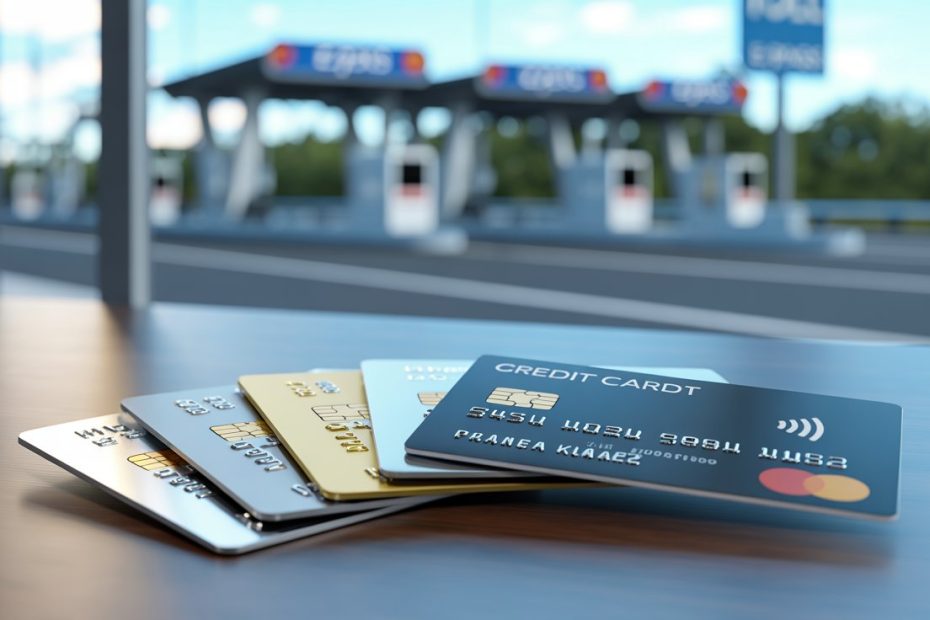
Toll costs are rising across the US. The right credit card linked to your E-ZPass, SunPass, or FasTrak account can earn you 2% to 5% back on every dollar you already spend. Here is how to pick the best one for your situation.
- Quick Answer: Best Card by Situation
- Best Personal Credit Cards for Toll Payments
- Personal Card Quick Comparison
- Best Business Credit Cards for Toll Payments
- Smart Ways to Maximize Your Toll Rewards
- 4 Best Practices for 2026
- How Toll Payments Get Coded
- How Major Banks Define "Transit" and "Travel"
- Final Summary: Pick the Right Card for You
Quick Answer: Best Card by Situation
| Your Situation | Best Card | Reward Rate |
|---|---|---|
| Highest cash back, no annual fee | Citi Custom Cash | 5% (up to $500/month) |
| High toll volume, no spending cap | Amex Blue Cash Preferred | 3% (no cap) |
| No annual fee + travel points | Wells Fargo Autograph | 3x points |
| EV driver | Wells Fargo Attune | 4% (public transit/EV) |
| Building travel points | Chase Sapphire Preferred | 2x points |
| Premium travel card | Chase Sapphire Reserve | 3x + $300 auto credit |
| Simple flat-rate miles | Capital One Venture X | 2x miles (everything) |
| Bank of America customer | BofA Customized Cash | Up to 3%+ |
| Business with a fleet | Amex Business Gold | 4x points (approx. 6.4%) |
Best Personal Credit Cards for Toll Payments
These are the top personal cards for toll payments in 2026, ordered from the highest reward rate to the most accessible.
1. Citi Custom Cash Card — Best for Moderate Toll Spenders
The Citi Custom Cash automatically earns 5% cash back in your single highest spending category each billing cycle. If tolls are your biggest monthly expense, this is the highest rate available on any no-annual-fee card.
Key details:
- 5% cash back on your top category, up to $500 per billing cycle
- 1% on all other purchases after the cap
- No annual fee
- $200 welcome bonus in 2026
Best for: Commuters spending under $500 per month on tolls.
Watch out for: Once you hit $500 in toll spending, the rate drops to 1% for the rest of that billing cycle.
2. Wells Fargo Attune Card — Best for EV Drivers
The Wells Fargo Attune earns 4% cash back on public transportation and EV charging, with no annual fee. It is the strongest no-fee card for drivers who charge their vehicle at highway service plazas.
Key details:
- 4% on public transportation, EV charging, and eco-friendly categories
- 1% on everything else
- No annual fee
Best for: EV drivers who regularly charge at toll plaza service areas.
Watch out for: Standard highway tolls may not qualify if the agency does not code as public transit. Run a test transaction before relying on the 4% rate.
3. Amex Blue Cash Preferred — Best for High Volume Commuters
The Amex Blue Cash Preferred earns 3% cash back on transit with no spending cap on that category. American Express defines transit broadly to include tolls, parking, subways, buses, and rideshare.
Key details:
- 3% on transit (including tolls) with no annual cap
- 6% on US supermarkets (up to $6,000 per year)
- 3% on US gas stations
- $95 annual fee (often waived the first year)
- $120 Disney+ Bundle credit ($10/month) effectively offsets most of the annual fee
- Up to $300 welcome offer after $3,000 in spending
Best for: Commuters in high-toll regions like the Northeast Corridor or California, where annual tolls exceed $3,000.
4. Wells Fargo Autograph Card — Best No Annual Fee Travel Card
The Wells Fargo Autograph earns 3x points on transit and travel, explicitly listing toll bridges and highways as qualifying purchases. No annual fee.
Key details:
- 3x points on travel, transit, restaurants, gas, streaming, and phone plans
- No annual fee
- Points never expire while the account stays open
Best for: Drivers who want strong transit rewards without paying an annual fee.
5. Chase Sapphire Reserve — Best Premium Card for Toll Users
The Chase Sapphire Reserve earns 3x points on all travel and includes a $300 annual travel credit that automatically applies to toll replenishments. Your first $300 in E-ZPass or FasTrak charges each year are effectively free.
Key details:
- 3x points on travel and dining
- $300 automatic travel credit (applies to toll replenishments — no portal required)
- $795 annual fee
- Priority Pass airport lounge access
- Global Entry or TSA PreCheck credit
- Net effective fee is approximately $75 after credits
Best for: Frequent travelers who combine heavy commuting with regular air travel.
6. Chase Sapphire Preferred — Best Entry-Level Travel Points Card
The Chase Sapphire Preferred earns 2x Ultimate Rewards points on travel. Chase includes local commuting in its travel definition, so tolls, bridges, and parking usually qualify.
Key details:
- 2x points on travel (including tolls)
- $95 annual fee
- $50 annual hotel credit
- Points transfer to United, Hyatt, Southwest, and other partners
Best for: Frequent travelers who want to earn toll rewards alongside flights and hotels.
7. Capital One Venture X — Best for Simple Miles Earning
The Capital One Venture X earns a flat 2x miles on every purchase, no category management required. Toll replenishments earn the same rate as hotel bookings or flights.
Key details:
- 2x miles on all purchases, no exceptions
- $300 annual travel credit through Capital One Travel
- 10,000 anniversary miles each year
- $395 annual fee
- Global Entry or TSA PreCheck credit
- Net effective annual fee is approximately $0 after credits
Best for: Drivers who want a predictable, set-and-forget reward rate.
8. Bank of America Customized Cash Rewards — Best for BofA Members
The BofA Customized Cash Rewards lets you choose one category for 3% cash back. Selecting “travel and transportation” covers toll payments at that elevated rate.
Key details:
- 3% on your chosen category (pick travel and transportation for tolls)
- No annual fee
- $2,500 per quarter combined spending cap on the 3% and 2% categories
- Preferred Rewards members earn up to 75% more — effectively over 5% on tolls
Best for: Existing BofA customers, especially Preferred Rewards members.
Personal Card Quick Comparison
| Card | Toll Reward Rate | Annual Fee | Best For |
|---|---|---|---|
| Citi Custom Cash | 5% (up to $500/month) | $0 | Moderate toll spenders |
| Wells Fargo Attune | 4% (public transit/EV) | $0 | EV drivers |
| Amex Blue Cash Preferred | 3% (no cap) | $95 | High volume commuters |
| Wells Fargo Autograph | 3x points | $0 | No fee transit rewards |
| Chase Sapphire Reserve | 3x + $300 auto credit | $795 | Premium travelers |
| Chase Sapphire Preferred | 2x points | $95 | Entry level travel points |
| Capital One Venture X | 2x miles (everything) | $395 | Simple travel redemption |
| BofA Customized Cash | Up to 3%+ with Preferred Rewards | $0 | BofA members |
Best Business Credit Cards for Toll Payments
Business toll expenses scale with fleet size and can reach tens of thousands of dollars per year. These cards are built for high-volume spending.
Amex Business Gold — Best for High Transit Volume Businesses
The American Express Business Gold Card automatically earns 4x Membership Rewards points in your two highest spending categories each billing cycle. Transit is one of six eligible categories, covering tolls, parking, trains, and rideshare.
Key details:
- 4x points on top two spending categories (up to $150,000 per year combined)
- Transit includes tolls, parking, trains, and rideshares
- At 1.6 cents per point, that equals approximately 6.4% return on toll spending
- $375 annual fee
- Up to $240 in annual business credits ($20/month at FedEx and office supply stores)
Chase Ink Business Preferred — Best Value Business Card
The Chase Ink Business Preferred earns 3x points on travel, including tolls and bridges, across up to $150,000 in combined annual spending.
Key details:
- 3x points on travel, shipping, internet/cable/phone, and social media advertising
- $95 annual fee
- 100,000 point welcome bonus after $8,000 in spending (worth approximately $1,250 in travel)
- Points transfer to Chase airline and hotel partners
Brex and Ramp — Best for Larger Fleets
For enterprises managing many vehicles and drivers, Brex and Ramp offer operational control that goes beyond reward rates.
Brex advantages:
- Issue virtual cards to drivers with specific spending limits
- Restrict cards to toll merchants only
- Automatic receipt capture and reconciliation
Ramp advantages:
- Flat 1.5% cash back on all transactions
- Automatic flagging of missing toll receipts
- Direct integration with QuickBooks and NetSuite
For businesses running hundreds of monthly toll transactions across multiple states, the time saved on bookkeeping often outweighs a higher reward multiplier.
Smart Ways to Maximize Your Toll Rewards
The right card is the foundation. These strategies help you get even more out of every toll dollar.
Use Digital Wallets to Override Miscoding
Some toll apps allow replenishment through Apple Pay or Google Pay. The US Bank Altitude Reserve earns 3x points on all mobile wallet transactions. If your toll app supports Apple Pay, that rate applies regardless of how the agency codes the charge at the network level. This is a reliable fallback for agencies that frequently miscategorize.
Offset Annual Fees with Lifestyle Credits
Several top transit cards include credits that bring the effective annual fee close to zero.
| Card | Annual Fee | Credits Available | Net Effective Fee |
|---|---|---|---|
| Amex Blue Cash Preferred | $95 | $120 Disney+ Bundle ($10/month) | Approximately $0 |
| Chase Sapphire Reserve | $795 | $300 travel + $300 dining + $120 Lyft | Approximately $75 |
| Amex Business Gold | $375 | $240 business + $155 Walmart+ | Approximately $0 |
| Capital One Venture X | $395 | $300 travel + 10k anniversary miles | Approximately $0 |
If you already pay for Disney+, shop at Walmart, or spend regularly on dining out, these credits can cover the annual fee before you earn your first toll reward.
Pay Your Balance in Full Every Month
As of March 2026, variable APRs on top transit cards exceed 28%. Carrying a $500 toll balance for one month costs approximately $12 in interest. That wipes out the $15 to $25 you might earn at 3% to 5%. Rewards only benefit you when you pay in full each billing cycle.
Set Low Auto-Replenishment Thresholds
Replenish in smaller amounts more frequently rather than keeping a large prepaid balance. This keeps less money locked in the toll agency’s system earning nothing, and generates more transaction events for your card to capture rewards on.
4 Best Practices for 2026
Follow these four steps consistently to get maximum value from your toll spending.
- Verify the coding first. Make a small test replenishment. Check your statement to confirm the charge category before committing to auto-pay at high volume.
- Stack rewards where possible. Combine agency discounts like SunPass Savings with credit card rewards. The compounded benefit can exceed 30% off your total toll costs.
- Monitor auto-replenishment amounts. Review your transponder account monthly. Catch any automatic increases to your top-up threshold and adjust them back down once usage normalizes.
- Match the card to your volume. Under $500/month: Citi Custom Cash at 5%. Over $500/month or no cap needed: Amex Blue Cash Preferred at 3%. Business fleet: Amex Business Gold at approximately 6.4%.
How Toll Payments Get Coded
This section explains the mechanics behind toll rewards for anyone who wants to understand how it all works under the hood.
Banks use a system called Merchant Category Codes (MCCs) to classify purchases. The code your toll payment receives determines which reward rate your card applies.
For toll payments, the two most common codes are:
- MCC 4784 — Tolls and Bridge Fees
- MCC 4111 — Local and Suburban Commuter Passenger Transportation
Not every toll agency uses the same code. Some code as government services, which typically earns only 1% back regardless of your card. The method you use to pay also affects this.
- Online account replenishments most reliably trigger travel or transit multipliers
- Kiosk replenishments at gas stations may code as fuel instead
- Toll app top-ups via Apple Pay or Google Pay can route through a mobile wallet, sometimes unlocking a different rate entirely
Pro tip: Always run a small test replenishment with a new card before setting up auto-pay. Check your statement to confirm exactly how the charge appears.
How Major Banks Define “Transit” and “Travel”
Different banks use different definitions. This table shows which issuers include tolls in their reward categories in 2026.
| Financial Institution | Primary Category | Tolls Included? | Key Exclusions |
|---|---|---|---|
| American Express | Transit | Yes (tolls, parking, rideshare) | Airfare and cruises on some cards |
| Chase (Personal) | Travel / Local Transit | Yes (tolls, bridges, parking) | Gift shops inside travel hubs |
| Wells Fargo | Transit | Yes (toll bridges and highways) | General retail inside transit stations |
| Bank of America | Travel (Choice) | Yes (tolls, parking, bridges) | Gas stations (separate 3% choice) |
| Navy Federal | Transit | Yes (road fees, tolls, parking) | Supermarket fuel centers |
| U.S. Bank | Ground Transportation | No (tolls excluded) | Toll stations specifically listed as exclusions |
Important: U.S. Bank’s Cash+ card excludes toll stations from its Ground Transportation category. Despite including Uber and Lyft, highway tolls do not qualify. Always read the fine print before linking a card.
Final Summary: Pick the Right Card for You
Every week, millions of Americans pay tolls and earn nothing back. The right card takes ten minutes to choose and can return $100 to $400 per year.
Here is the short version:
- Under $500/month in tolls? Citi Custom Cash earns 5% with no annual fee.
- Over $500/month or no cap needed? Amex Blue Cash Preferred earns 3% forever with no cap.
- Building travel points? Chase Sapphire Preferred or Reserve counts tolls as travel and transfers to airlines and hotels.
- Running a business fleet? Amex Business Gold earns approximately 6.4% back on toll and transit spending.
Pick intentionally. Link your card today. Let the rewards run quietly in the background while you drive.

Pavithra Vinoth is the founder of nytollsinfo.com, where she simplifies U.S. toll systems through expert insights and custom-built calculators. Her research-driven tools help drivers avoid costly mistakes and make smarter car decisions.